Have Your Health Insurance Premiums Dropped Under Obamacare?

Obama promised that Obamacare would lower health insurance premiums for American families by about $2,500. Here’s a video montage of Obama saying it again and again.

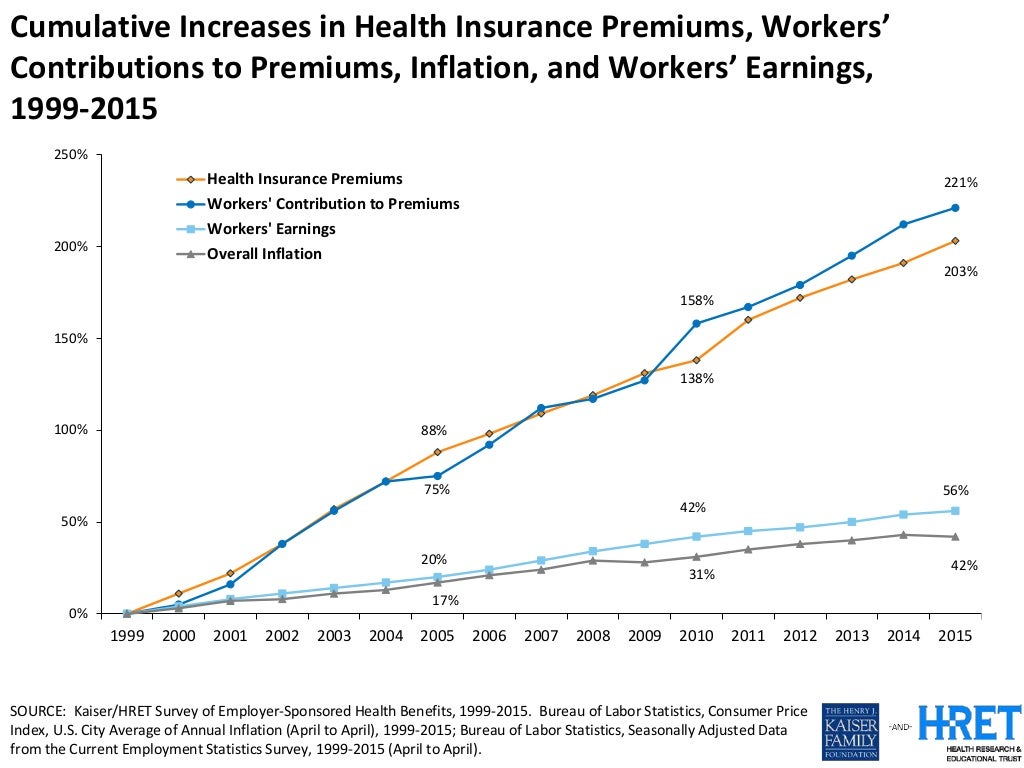
Do you know anyone who has seen their premiums go down since Obamacare was enacted in 2010? My premiums and deductibles went up yet again this year. Judging by the chart from the Kaiser Family Foundation below, I’m not alone.

Cannabis Oil Coming To Iowa

Iowa Governor Terry Branstad said that next week he will sign a bill legalizing the use of oil derived from marijuana to treat chronic epilepsy. This comes after the bill passed the Iowa legislature at the last moments of the session.

According to The Des Moines Register:

“The legislation requires patients with chronic epilepsy and their caregivers to acquire a registration card through Iowa’s Department of Public Health, per a written recommendation from a neurologist. The oil would have to be obtained in another state that produces it. The bill limits the amount of oil that can be in a patient or caregiver’s possession at any given time.

“Branstad said he supports the measure because of its narrow focus and applicability to a small number of people in need. He said that families with children suffering from severe epileptic seizures convinced him of the bill’s importance and that he believes the oil can help them.”

The bill is so narrowly focused that even Iowa’s anti-cannabis crusader Clel Baudler supported it. “I refuse to call it medical marijuana. It’s hemp oil. I hope it works,” he said. “Right here, right now, we have the opportunity to do something that is very good.”

Even if the further legalization of other forms of medical marijuana doesn’t take root here in Iowa, as it has in other states, at least this bill will provide some relief for some very sick children and their families now.

Obamacare Summed Up in One Sentence

Dr. Barbara Bellar, candidate for Illinois state senate, humorously explains Obamacare in one (really long) sentence. 

Iowa Joins Lawsuit Against Obamacare. YES!

From the DesMoinesRegister.com on Tuesday, January 18th:

Gov. Terry Branstad has joined 25 other states in a federal lawsuit challenging the constitutionality of the health care reform bill approved last year by Congress, a Branstad aide confirmed today.

Branstad, a Republican, joined the lawsuit on behalf of Iowa taxpayers, said Tim Albrecht, the governor’s spokesman. The suit challenges the individual mandate of the health care reform, as well as the expansion of Medicaid, the state-federal health insurance program for low-income people, he said.

I’m not a big Branstad fan, but I do like this.

One Step Closer To Medical Marijuana In Iowa

In a victory for common sense, the Iowa Board of Pharmacy unanimously voted today to recommend that legislators reclassify marijuana from “Schedule I” (banned) to “Schedule II,” which would allow medical use with a prescription.

The Des Moines Register reports: “The board also recommended the state set up a broad task force, including patients, medical professionals and law enforcement officers, to come up with a way to safely implement a medical marijuana program.

“Marijuana proponents cheered after the vote was taken, but they acknowledged that hurdles remain before the drug could become available to patients.

“‘This is a big thing. This is momentum,’ said Carl Olsen, one of the measure’s main Iowa proponents. He said he didn’t expect legislators to consider the matter until next year’s legislative session.”

A recent Des Moines Register poll showed that 64% of Iowans support medical marijuana with a doctor’s approval.

If Iowa legislators soon pass a law legalizing medical marijuana, this would not only be a victory for suffering patients, but for states’ rights under the Tenth Amendment as well.

Healthcare Sovereignty Bill In Iowa

I normally don’t post emails that I get, but since this one was extremely time sensitive and may interest regular readers of this blog, I’ve included the following “action alert” from Iowa Campaign For Liberty (CFL). It deals with the “Growing Movement to Nullify National Health Care.” For a quick overview of the state sovereignty/10th Amendment issue, read my interview with 10th Amendment Center founder Michael Boldin. -Ben

Action Item – State Sovereignty Legislation

During Iowa’s legislative session Bills are assigned to committees. In order for a Bill to become law it must first be released out of committee.

This FRIDAY, February 12, @ 5:00 pm is the deadline for having Bills out of committee. If a Bill has not been released by a committee by then it is considered “DEAD” and NOTHING will become of it.

Iowa CFL has been working with Legislators to pass several Bills that relate to Health Care and/or State Sovereignty. One in Particular is HF 2177.

HF 2177 simply states, “This bill establishes that no law shall restrict a person’s right to choose private health care systems or private health care plans.” This Bill is designed to establish Iowa law that says the federal government cannot dictate to private citizens what they choose to do regarding their health care.

CFL urges all of its members to email, call and/or visit all 21 House Human Resources committee members and urge their support for HF 2177.

Here is some suggested language for you to “cut and paste” into your own email:

Dear Committee Member,

I am emailing you regarding HF 2177. This Bill is about health care, which is very personal to me. I want to insure that I will always be able to choose my own health care plan; if I choose one at all.

I’m calling for your support on this Bill and for you to insure that it comes out of Committee before the deadline on Friday, February 12, at 5:00 pm.

This Bill is important in that it will insure that the overreaching federal government will not be able to dictate any part of my health care. The Tenth Amendment to the Constitution of the United States guarantees that each individual state has the authority to over rule federal mandates not enumerated in the constitution.

So in part, your support for this Bill, is simply re-affirming your oath of office; in that you will uphold the Constitution of the United States.

Here’s the list of email addresses for all 21 House Human Resources committee members:

mark.smith@legis.state.ia.us; deborah.berry@legis.state.ia.us; linda.miller@legis.state.ia.us; ako.abdul-samad@legis.state.ia.us; dwayne.alons@legis.state.ia.us; clel.baudler@legis.state.ia.us; greg.forristall@legis.state.ia.us; dave.heaton@legis.state.ia.us; lisa.heddens@legis.state.ia.us; bruce.hunter@legis.state.ia.us; kevin.koester@legis.state.ia.us; mary.mascher@legis.state.ia.us; tyler.olson@legis.state.ia.us; janet.petersen@legis.state.ia.us; renee.schulte@legis.state.ia.us; chuck.soderberg@legis.state.ia.us; sharon.steckman@legis.state.ia.us; phyllis.thede@legis.state.ia.us; linda.upmeyer@legis.state.ia.us; roger.wendt@legis.state.ia.us; beth.wessel-kroeschell@legis.state.ia.us

You can email them as a group or individually if you want for a more personal touch.

If one of these committee members happens to be your own Representative (you can use this link to find your state representative: http://www.legis.state.ia.us/FindLeg/ ) you will be more likely to get their attention, so send them their own individual email from you and feel free to insert this or similar language after the first sentence:

As a constituent in your District I will surely be watching your action on this Bill. If you are unable to support this Bill you will surely not receive my vote in this upcoming election.

Phone calls (or even a personal visit) to the capitol are also effective. The House switchboard number is 515-281-3221

Your action is greatly appreciated and necessary.

Ron Truhlar
Campaign for Liberty/State Sovereignty Co-coordinator
319.248.9869

State Sovereignty Group Supports Lawsuit Against Obamacare

In my post four days ago I said to expect lawsuits challenging Obamacare’s constitutionality. Well, the ink is barely dry on the recently-passed Senate bill and the lawsuits are gearing up already. The Utah-based Patrick Henry Caucus may be the first one to challenge the (sure to be signed) new law. Here’s their press release from today:

UTAH PATRICK HENRY CAUCUS UNANIMOUSLY SUPPORTS A LAWSUIT AGAINST THE FEDERAL GOVERNMENT IN ORDER TO STOP THE FEDERAL HEALTH CARE BILL

Leading state sovereignty caucus strongly opposes the federal health care bill and supports lawsuits based on two violations of the U.S. Constitution.

The Patrick Henry Caucus adopted a unanimous position Wednesday, December 23, 2009, to oppose the Health Care Reform Bills, and to support a lawsuit against the federal government in order to stop the national health care bill from becoming law.

Calling the law unconstitutional, The Patrick Henry Caucus, which is comprised of legislators from both the Utah House of Representatives and the Utah Senate, vows to fight the federal law on multiple fronts. The Patrick Henry Caucus has an opt-out provision drafted and ready for presentation to the Utah Legislature next month. The opt-out would make it illegal for Utah agencies to implement any portion of the new federal law. The Caucus is calling on the State of Utah to join in with other States and take the lead on filing a lawsuit to stop the bill, should it receive final approval.

The Caucus believes the law is unconstitutional in at least two respects. First, the law unfairly gives preferential treatment to residents of Nebraska as a result of efforts by Senate Democrats to court the vote of Nebraska Senator Ben Campbell. The Caucus
believes that this preferential treatment violates principles of due process and equal protection and is therefore unconstitutional under the Fifth and Fourteenth Amendments.

Second, the law amounts to an excess of Congress’s enumerated powers inasmuch as it requires every American to acquire health insurance. This legislation marks the first time in history that Congress has required every single American to purchase a particular good or service, and cannot be reconciled with the notion that Congress possesses only those limited powers granted by the Constitution.

The Patrick Henry Caucus calls on the leaders from all States to join in the effort to file a lawsuit against the federal government in order to stop this wrongheaded piece of legislation. We must not allow Congress to commandeer one sixth of our nation’s fragile economy while simultaneously undermining the authority of the States.

Three Reasons To Oppose Obamacare

It appears that the clock is ticking toward a Christmas Eve vote on the U.S. Senate’s healthcare “reform” bill. As I see it there are three primary reasons not to like this monstrosity.

1. It’s unconstitutional.

Before Congress passes any legislation, it should first ask itself: “Does the Constitution allow this?” Apparently this doesn’t even cross their minds anymore.

The Constitution gives Congress absolutely NO authority over healthcare. As I’ve written before at length, the often pointed-to general welfare and commerce clauses do not give Congress free rein to meddle in every aspect of the American peoples’ day-to-day lives.

When this onerous bill does pass, expect numerous court challenges to the new law. Since it is mainly liberals pushing for this government takeover of the medical industry, it is ironic that one of their favorite Supreme Court rulings, Roe v. Wade, may help hasten its downfall. It’s hard to reason that the doctor-patient relationship is shielded by some sacred right to privacy from government intrusion when an abortion is being performed, but not when a colonoscopy or hip replacement is.

Whatever parts of the bill that the courts don’t swat down, the states may be willing to mop up themselves. As reported earlier, many states are set to pass laws nullifying the new healthcare law. The Tenth Amendment Center, which tracks state nullification laws, expects 20 to 25 states to consider such legislation in 2010. If enough states dig in their heels in resistance, they may be able to smother the new healthcare reform in the cradle, as they did with the Real ID law.

2. We can’t afford it.

The U.S. government is currently over $12 Trillion in debt. That is $39,435 in public debt for every man, woman and child in America. The future benefits that the government has already promised to American citizens for Social Security, Medicare, and Medicare drug benefits (with no way to pay them) amounts to $106 Trillion. That’s $346,049 in unfunded liabilities for every living soul in America. The Chinese and the rest of the world are growing weary of financing our debt.

No organization that is that far in the hole should be starting any massive new entitlement program. In November the Congressional Budget Office figured that the Senate healthcare reform bill would cost $849 billion over the next decade. One thing we should learn from previous government spending programs, whatever they say it may cost, the actual price tag will be much, much higher.

3. It won’t work as advertised.

As Don Racheter, PhD points out in a recent Institute Brief for the Public Policy Institute at Iowa Wesleyan College: “Those who favor a ‘public option’ (read government-controlled medicine) are ignoring all the problems in the Social Security Disability program, Veteran’s Hospital system, Medicare, and Medicaid and want to extend these failed government regimes to the rest of us. Those pushing for more socialized medicine refuse to acknowledge that things controlled by government (such as the Post Office, Amtrak, government-run schools, etc.) continue to decline in quality while costing more and more. In contrast, products produced in the competitive private sector (I-pods, cell phones, computers, etc.) continue to improve in quality and decline in price.”

In another brief Racheter rightly concludes that we need “reforms that involve choice, competition, and consumer-driven plans, rather than more coercion, control, and central planning. And let the states be ‘laboratories of democracy’ which try different plans to see what works – and what doesn’t – before we legislate a ‘one size fits all’ plan from Congress.”

He continues: “Indiana seems to have had success with a reform plan which includes an insurance pool for small businesses, tax incentives for employers who offer health-care insurance, free preventive care, a health-savings account, and annual insurance coverage from a private company. Texas has been doing tort reform since 1995 which has resulted in lower medical malpractice rates and more doctors starting to practice in the state. Massachusetts, on the other hand, has had a plan in operation since 2006 which mandates everyone buy a state approved health-insurance plan or pay a fine. The Indiana and Texas plans seem to be accomplishing their goals, while costs in Massachusetts continue to rise without accomplishing universal coverage. So why are all the plans currently being considered in Congress using the latter approach rather than the former?!” Good question.

Someday, when our soon-to-be enacted healthcare plan fails, we’ll need to spend even more money (that we won’t have) to “rescue” an unconstitutional travesty that never should have been. If our children or grandchildren don’t revolt and hang us, they don’t deserve the title “Americans.”

The Growing Movement to Nullify Nat’l Health Care

[From our friends at the Tenth Amendment Center. Reprinted with permission.]

by Michael Boldin

In response to what some opponents see as a Congress that doesn’t represent their interests, State Legislators are looking to the nearly forgotten American political tradition of nullification as a way to reject any potential national health care program that may be coming from Washington.

In 2010, residents of Arizona will be voting on a State Constitutional Amendment that would let them effectively opt out of any proposed national health care plan. Legislatures in Florida, Michigan, Ohio and Pennsylvania are also considering similar State Constitutional Amendments.

And now, Missouri is joining them. According to a report in The Missourian, “Rep. Cynthia Davis, R-O’Fallon, pre-filed a bill Dec. 1 that, if approved by voters, would effectively put a halt on any national health care legislation. Davis said her intent was to give voters a way to protect themselves.”

FREEDOM TO PARTICIPATE

The bill, HJR48, “Proposes a constitutional amendment which would prohibit compelling a person to participate in any health care system.”

It states:

“To preserve the freedom of citizens of this state to provide for their health care, no law or rule shall compel, directly or indirectly or through penalties or fines, any person, employer, or health care provider to participate in any health care system. A person or employer may pay directly for lawful health care services and shall not be required to pay penalties or fines for paying directly for lawful health care services. A health care provider may accept direct payment for lawful health care services and shall not be required to pay penalties or fines for accepting direct payment from a person or employer for lawful health care services. Subject to reasonable and necessary rules that do not substantially limit a person’s options, the purchase or sale of health insurance in private health care systems shall not be prohibited by law or rule.”

NULLIFICATION: A HISTORY LESSON

The principle behind such legislation is nullification, which has a long history in the American tradition. When a state ‘nullifies’ a federal law, it is proclaiming that the law in question is void and inoperative, or ‘non-effective,’ within the boundaries of that state; or, in other words, not a law as far as the state is concerned.

Early nullification movements began with the Virginia and Kentucky Resolutions of 1798. These resolutions, secretly authored by Thomas Jefferson and James Madison, asserted that the people of the states, as sovereign entities, could judge for themselves whether the federal government had overstepped its constitutional bounds – to the point of ignoring federal laws.

Virginia and Kentucky passed the resolutions in response to the federal Alien and Sedition Acts, which provided, in part, for the prosecution of anyone who criticized Congress or the President of the United States.

Nullification was regularly called upon by states all over the country in response to everything from higher taxes to the fugitive slave law of 1850.

A MODERN NULLIFICATION MOVEMENT

Besides the Health Care legislation in Arizona, activists and state-legislators are pushing forward with nullification efforts all across the country – and it spans the political spectrum.

Thirteen states now have some form of medical marijuana laws – in direct contravention to federal laws which state that the plant is illegal in all circumstances. Massive state nullification of the 2005 Real ID Act has rendered the law nearly void. And, two states, Montana and Tennessee, have already passed laws nullifying federal gun laws and regulations within their states.

HOWEVER WE CHOOSE

“We (Missourians) don’t like it when people try to take away our freedom,” Davis told The Missoulian. “We will maintain the right to purchase health care however we chose. This national health care debate is not about health care as much as it is about redistribution of the wealth. This resolution allows voters to say don’t redistribute our wealth here in Missouri.”

George Senate Majority Leader Chip Rogers, in an interview with the Atlanta Business Chronicle said, “Proposals to deny or limit access to the purchase of private health care are simply unacceptable. Our basic freedoms are at risk with the government-run health care proposals coming out of Washington.” Legislators from Georgia recently announced that they would be introducing a similar resolution in 2010.

REAL ID AS THE BLUEPRINT?

Supporters of modern nullification efforts look to the successful rebellion by states against the Bush-era Real ID Act.

In early 2007, Maine and then Utah passed resolutions refusing to implement the federal Real ID act on grounds that the law was unconstitutional. Well-over a dozen other states followed suit in passing legislation opposing Real ID.

Instead of attempting to force the law to implementation, the federal government delayed implementation not once, but twice. And in June of this year, the Obama administration, recognizing the insurmountable task of enforcing a law in the face of such broad resistance, announced that it was looking to “repeal and replace” the controversial law.

Supporters see this as a blueprint to resist various federal laws that they see as outside the scope of the Constitution. Some say that each successful state-level resistance to federal programs will only embolden others to try the same – resulting in an eventual shift of power from the federal government to the States and the People themselves.

Michael Boldin is the founder of the Tenth Amendment Center

Copyright © 2009 by TenthAmendmentCenter.com. Permission to reprint in whole or in part is gladly granted, provided full credit is given.

Beth Cody on Gov’t-Run Health Care

Wednesday’s edition of the Iowa City Press-Citizen had a good column by libertarian writer Beth Cody called “Let’s focus on fixing the sick part of our health care system,” which is in response to the increasing call for government-run health care. Cody, a small business owner and writer, assures readers that government “universal coverage” will be “universally disappointing.”

In her column, Cody points out that there really isn’t a problem with health care per se, most people are happy with the actual care they receive. (Since I just spent two and half days in the hospital with my wife having a new baby, I agree wholeheartedly. The staff and facility at St. Luke’s birthing center in Cedar Rapids were first rate.) Cody says the real problem is with the cost and complexity of the insurance system that has grown up around health care.

Among the flaws of the current insurance regime, Cody points out:

  1. “Insurance policies are expensive because competition is restricted — individuals must buy policies in their own state.”
  2. “Each state has long lists of mandated coverages for things consumers often don’t want or need, which makes insurance so expensive that many must go without coverage entirely.”
  3. “Tax policy encourages reliance on employer-provided insurance, leading employees to stay in bad job situations merely to keep their insurance.”

Since these three main forces driving up health care costs are created by the government itself, is it likely that the government will be able to reduce health care prices? I cannot, for the life of me, understand the faith that many people have that the government can do so, when every other program administered by the federal government is either a wasteful disgrace or teetering on insolvency or both.

Cody lists some of the other side-effects of government health plans, including waiting lists, doctor shortages, lower survival rates, and discrimination against elderly, minority and rural patients. She recommends reading the Cato Institute’s policy analysis “Health Care in a Free Society” for more examples. (I would also recommend a shorter Cato article “Obama Doesn’t Have the Only Prescription for Healthcare Reform.”)

So what can be done to reform the health insurance industry? Cody recommends four mostly market-based reforms:

  1. “Allow people to purchase insurance from any state — this will lead to more competition and much lower rates.”
  2. “Repeal corporate deductibility of premiums and replace it with individual tax credits. This will sever the unhealthy relationship between employment and insurance, empower individuals and lead to more individual plan competition and lower rates.”
  3. “Allow insurers to charge less to policyholders who practice healthy habits — this is mostly illegal now, incredibly.”
  4. “Reform medical malpractice laws, which will make health care itself less expensive.”

These all certainly make sense and would be helpful in making health insurance less expensive, but it would be nice to see some reforms that lessen or eliminate the need for health insurance altogether.

Food is as much a necessity as health care, yet we don’t have some elaborate, overly-complicated, often senseless system to pay for it. Imagine having to pay a $25 co-payment every time you made a trip to the grocery store, whether buying ramen noodles or veal chops. Broccoli might be “covered” while cauliflower is not. It would be utter nonsense, yet we think it makes sense for health care? So long as health care consumers rely on a third party to pay the bill, prices will continue to be out of whack with reality.

If, like food shoppers, health care consumers knew exactly what price they were paying and had to pay out of their own pockets, competition would soon drive health care prices down to the lowest sustainable level. Tax exempt “health savings accounts” are one small step in that direction. Abolishing the income tax, which has so perverted market incentives in health care (as well as everywhere else) would be even better. Well, I can dream.

Barring “radical” reform like that, Beth Cody is certainly right, a market-based health insurance industry would be infinitely better than any government-run program. Unfortunatly, that doesn’t appear to be the way the political winds are blowing.