Forbes Article: "Economic Forecast For A Libertarian President"

I’m amazed at the amount of mainstream press that Libertarian presidential candidates Governors Gary Johnson and William Weld are garnering. Here’s a great recent example from Forbes which tries to predict the economic impact of a Gary Johnson administration: “Economic Forecast For A Libertarian President.”

A few highlights:
  • You can read the whole article here.”In the long run, the economy will be better off with market-oriented reforms. […] But getting from here to there depends on how the public perceives the new president.”
  • “Foreign military activity would certainly be reduced by a Libertarian president, making those defense cuts easier. But Congressional loyalty to military bases and defense contractors in their districts and states will prevent cuts from going too deep.”
  • “A President Gary Johnson would veto quite often. He used this power 200 times in his first six months as governor of New Mexico, earning the nickname ‘Governor Veto.'”
  • “Federal spending would fall under a Libertarian administration, but the president must spend appropriated money whether he wants to or not[.]”

You can read the whole article here.

    Herbert Stein’s Law

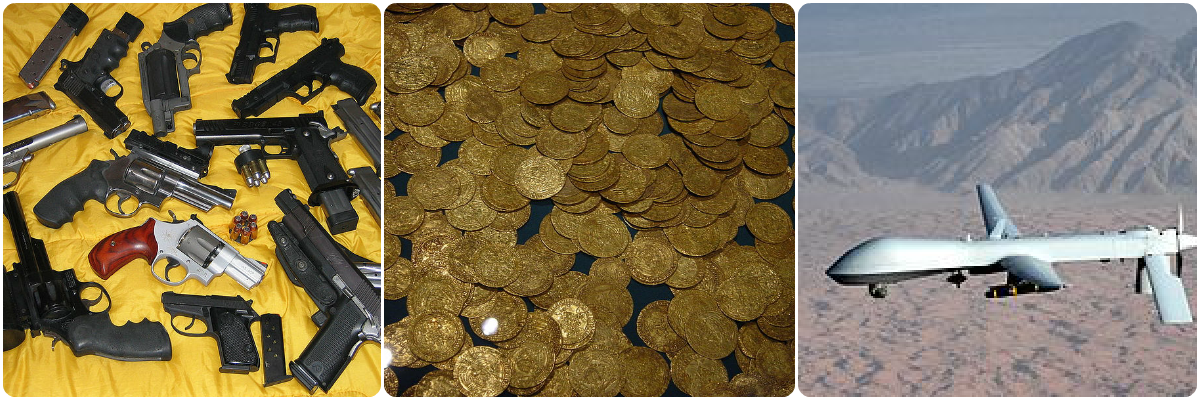
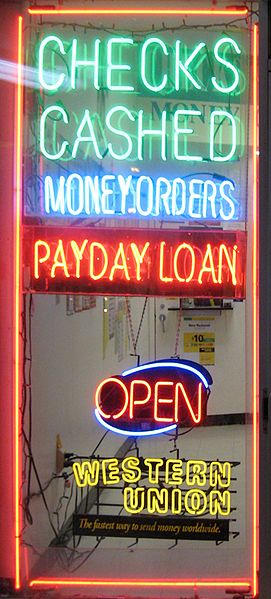
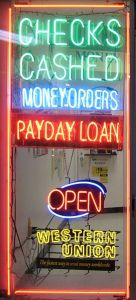
    Gold, Guns and Drones

    The bills continue to flow through the legislative sausage press in Des Moines. They range from atrocious to pretty good. Here are a few more that caught my eye.

    Bad Bills:


    Two of the bad bills, SF233 & HF 164, are “universal background check” bills. Remember: “Universal Background Checks= Gun Registration= Gun Confiscation.”

    Senate File 233: Iowa Gun Owners calls this Iowa’s “Most Dangerous Anti-Gun Bill of 2013.” Hidden among innocuous provisions of an “education” bill, this bill would mandate that virtually every firearm transfer in the state go through a licensed gun dealer so that a NICS check may be conducted. If you think the gun dealer will do that for you for free when you want to sell your old shotgun to your neighbor, I’ve got some beachfront property in Arizona to sell you.

    Even more ominous, this bill would also require social workers, guidance counselors, physician’s assistants and even nurses to report you to authorities if they think you’re acting a little too weird to have Second Amendment rights. Obviously no one wants dangerous lunatics to have guns, but I don’t want some busybody nurse or social worker being able to strip people of their rights.

    House File 164: According to Iowa Firearms Coalition: “It would require background checks be conducted by an FFL on ALL private firearm transfers with no exceptions, and allows the dealer to collect fees in the process. HF 164 would also provide for limitless fees (taxes) for transfers in order to fuel this enormous bureaucratic process, and allow the Department of Public Safety (DPS) to create ‘rules’ as necessary on how to implement the system, which is just another form of universal registration.”

    House File 163: This would ban the sale and transfer of any ammunition feeding device that holds more than 10 rounds of ammo. This was introduced by Representative Bruce Hunter (D-34), the same guy who introduced HF164 above. What a douche!

    Senate Study Bill 1165/ House Study Bill 91: These twin bills would circumvent Iowa’s normal search warrant process and replace it with a phony-baloney rubberstamp process for allowing officials to plant GPS trackers on Iowans’ vehicles. That is inconsistent with the constitutional requirements under the U.S. and Iowa constitutions governing searches. Click HERE to learn more and to contact the appropriate subcommittee members on this bill.

    Good Bills:

    House File 346: This bill would recognize gold and silver coin as legal tender in the state of Iowa. You may recognize that this is an authorized state power under the U.S. Constitution, Article I, Section 10. There are lot of good economic reasons for this as well as ones dealing with federalism. Caffeinated Thoughts had a great writeup on the bill you should check out for more details.

    Senate File 276: This would place a moratorium on the use of surveillance drones by all state agencies in Iowa and strictly prohibit weaponized drone systems. It would allow the use of drones under several limited circumstances such as search and rescue operations or AMBER Alert searches. Anything that can slow the growth of the surveillance state that we more and more find ourselves living in is a good thing.

    SF276 is currently stalled because the chairman of the Senate Judiciary Committee, Senator Robert Hogg (D- Cedar Rapids), is sitting on it. Please contact Hogg and ask him to give SF276 the consideration it deserves and schedule a hearing ASAP. (rob.hogg@legis.iowa.gov , 319-247-0223)

    With all these bills please contact your state legislator and voice your support or opposition.

    "Free Market Makes a Lot of Sense" Redux

    In November I posted an excerpt and a link to a guest column I had in the Cedar Rapids Gazette. Since I’m not sure how long the Gazette will maintain that link on their website, I present the original unedited version of that article below:

    By now it’s well-known that the Obama Administration’s “Manufacturing Czar” Ron Bloom raised a few eyebrows when he stated that “the free market is nonsense.” If the waning months of the Bush Administration are any indication, the leaders of both major parties now basically share this philosophy. That’s a pity.

    Our “nonsensical” free (though increasingly regulated) market has given America one of the highest standards of living in the world. Even our poor people could have it much worse. According to the Heritage Foundation, of poor households in the United States: 46% own their own homes, 76% have air conditioning, nearly 75% own a vehicle (30% own two), 97% own a color television, 62% have cable or satellite television. 89% of poor families say they have enough to eat, while only 2% say they “often” do not have enough to eat. Imperfect, but not bad.

    If we don’t have a free market economy, then we have a command economy wherein government regulators control wages, prices and production rates. (Sure, it’s a sliding scale between the two, but an administration that views one end as “nonsense” will obviously only let us slide one way.)

    When I was young, the Soviet Union was the ultimate embodiment of a command economy. I spent some time there in the summer of 1991 as a “student ambassador.” A group of American students and I toured the country, seeing Moscow, Leningrad (now St. Petersburg) and the Estonian countryside. We stayed with some nice Russian families. Although my three weeks there certainly doesn’t make me an expert on all things Soviet, it was an eye-opening trip for a sixteen year old Iowa farm boy nonetheless.

    I saw the blocks-long lines of people waiting for bread and other necessities. I toured GUM department store in Moscow. A great Soviet achievement, we were told it was the largest department store in the world. It’s shelves were bare.

    Somewhere I got a small toy Soviet army tank. The price was stamped right into the steel bottom of it at the time of manufacture. (I forget what the price was. Let’s say two rubles.) That price, as well as the number to be produced, presumably, had been set by some panel of government planners months before the toy tank rolled off the production line.

    What would the price have been if the toy tank had become the “must-have” toy for Russian kids, with demand quickly outstripping production? Two rubles, get in line! What would the price have been if it was sold in a store on the far side of Siberia, burning up 4,000 miles worth of fuel resources to get there? Two rubles. And if Russian kids hated the new toy and would rather play with a broken piece of cobblestone? Then they would gather dust on store shelves, available for the low, low price of… two rubles.

    It’s easy to see that a market system based upon the logical decisions of bureaucrats a month or a week ago quickly becomes a system based upon no logic at all. This is the “sensible” system that the Manufacturing Czar and, by extension, his boss President Obama advocate?

    Although I hope that we don’t follow the Soviet economic model, there’s at least one thing that the Soviets got right. They got rid of their czars.

    Honey Creek Money Pit

    In July I reported to you on Honey Creek Resort in southern Iowa. I pointed out at that time that, in addition to diverting funds (about $58 million) from other more legitimate government projects, the state was creating a taxpayer assisted entity that would directly compete with private industry. I argued that the jobs “created” at Honey Creek were actually jobs stolen from around the state.

    Now the Cedar Rapids Gazette reports that in its first 9 months of operation the resort lost $900,000. A state audit showed that between September 2008 and June 2009 Honey Creek had revenues of $3.1 million but expenses of almost $4 million.

    In a separate piece, Gazette columnist Todd Dorman, who visited the resort last summer, said, “Although some lawmakers are talking about pulling the plug on state ownership, I’m withholding judgment until I see how a fully completed resort does this year in a slightly more stable economy.” True enough. Plenty of businesses lost money in the last year. Unfortunately I’d be opposed to government ownership of the resort even if it posted a tidy profit, for the philosophical reasons listed above.

    Dorman also added the warning: “If the state’s going to own a resort, it needs to think more like a crafty entrepreneur than a drowsy bureaucrat.” Here Dorman misses the point. Rather than trying to teach bureaucratic ducks to bark like entrepreneurial dogs*, why not just sell the thing to real entrepreneurs in the private market?

    It might be hard to find willing buyers right now, however, since entrepreneurs tend to be more wise with their own money than the legislature is with ours.

    *Not every metaphor I come up with can be a gem, people!

    Business Bogeyman Du Jour: Payday Lenders

    There appears to be some momentum in the upcoming Iowa legislative session to restrict payday loans in the state. Sometimes called a “payday advance,” payday loans are short-term (usually two-week) loans where the borrower issues a post-dated check to the lender.

    According to the Community Financial Services Association of America (CFSA), the industry organization for payday lenders, the typical fee charged by payday lenders is $15 per $100 borrowed. So a customer wishing to borrow $100 would write a check to the lender for $115. The lender would then give the borrower $100 cash. Two weeks later the lender would cash the customer’s check, keeping the extra $15.

    This simple arrangement has managed to stir the ire of legislators across the country, including Iowa. State Senator Joe Bolkcom, D-Iowa City, head of the Senate Ways and Means Committee, said, “The payday loan industry is our local counterpart to the crooks on Wall Street.” Other critics, such as Tom Chapman, executive director of the Iowa Catholic Conference, point out that interest rates on payday loans can run as high 400 percent. “We believe these types of interest rates are unjust and should be outlawed,” said Chapman. “Instead of promoting the financial stability of consumers, the system actually creates a financial incentive in the failure of Iowa families rather than their success.”

    But CFSA’s website points out: “The typical fee charged by payday lenders is $15 per $100 borrowed, or a simple 15 percent for a two-week duration. The only way to reach the triple digit APRs [annual percentage rates] quoted by critics is to roll the two-week loan over 26 times (a full year). This is unrealistic considering that many states do not even allow one rollover. In states that do permit rollovers, CFSA members limit rollovers to four or the state limit—whichever is less.”

    If a payday loan customer somehow did carry his loan for a whole year, how would that APR compare to other alternatives to low-income consumers? Again from the CFSA:

    $100 payday advance with a $15 fee = 391% APR
    $100 bounced check with $54 NSF/merchant fees = 1,409% APR
    $100 credit card balance with a $37 late fee = 965% APR
    $100 utility bill with $46 late/reconnect fees = 1,203% APR.

    So compared to these and other “quick cash” alternatives, like pawn shops, payday loans are not terribly out of line. If consumers with poor credit ratings could get small, quick loans elsewhere (such as conventional banks) they no doubt would. Since the payday lenders offer an apparently popular service that consumers can’t get elsewhere, why shouldn’t they be able to charge a premium price for it?

    So, what is the problem? The words of State Representative Janet Petersen, D-Des Moines, head of the House Commerce Committee, who favors new restrictions on payday lenders, offer some clues. Petersen says that, by restricting payday loans, “lenders will be forced to take some responsibility for ensuring that Iowans don’t end up in a vicious debt cycle.” [Emphasis added.]

    In the minds of people like Peterson, consumers are ignorant sacks of meat that mindlessly throw their money to greedy, unscrupulous businessmen (in this instance payday lenders). Without smart and benevolent legislators like Peterson and Bolkom to protect them every moment of the day, the people they represent are little more than sheep to be shorn by capitalist predators. If anyone is to “take some responsibility” for the lives of Iowans, it must be the lenders (and the legislators) who apparently draw from a more intelligent gene pool than mere citizens.

    Experience in other states has shown that restrictions on payday lenders result in fewer of those lenders. This would obviously mean fewer payday loans available to Iowans. Therefore, restricting payday lenders might allow liberal lawmakers to slap each other on the back for helping the “little guy,” but without reducing the NEED for or providing some new alternative to payday loans, they have only succeeded in worsening the little guys’ circumstances.

    "Free Market Makes a Lot of Sense"

    Here’s an excerpt from my column in today’s Cedar Rapids Gazette:

    “President Obama’s ‘manufacturing czar,’ Ron Bloom, raised a few eyebrows when he stated that ‘the free market is nonsense.’ If the waning months of the Bush administration are any indication, the leaders of both major parties now basically share this philosophy. That’s a pity.

    “Our ‘nonsensical’ free (though increasingly regulated) market has given the U.S. one of the highest standards of living in the world. […]

    “If we don’t have a free-market economy, then we have a command economy wherein government regulators control wages, prices and production rates. (Sure, it’s a sliding scale between the two, but an administration that views one end as ‘nonsense’ will obviously only let us slide one way.)

    “When I was young, the Soviet Union was the ultimate embodiment of a command economy.

    “I spent some time there in the summer of 1991 as a student ambassador. My three weeks there don’t make me an expert on all things Soviet, but it was eye-opening for a 16-year-old Iowa farm boy.

    “I saw the blocks-long lines of people waiting for bread and other necessities. I toured the GUM department store in Moscow. We were told it was the largest department store in the world. Its shelves were bare.”

    You can read the entire article here.

    State Cuts 10%; Culver Fiddles

    I couldn’t help but notice the irony in the title of O. Kay Henderson’s Radio Iowa report titled, “Agencies submit cuts; governor rides rails.” That sounds pretty similar to “Rome burns; Nero fiddles.”

    I’m not saying that the current state budget cuts are as bad as Rome burning, of course. As far as I’m concerned they should cut the budget even more. But I do appreciate the irony in the fact that as current state services are being cut, Governor Culver is joyriding on a train, showing where he wants to dump even more taxpayer money to feed his railroad fetish.

    Not wanting to prioritize, Culver made the 10% cut across-the-board. Cuts would include laying off 44 law enforcement officers (including 20 State Troopers, whose manpower was already at a 45 year low) and a fire inspector at the Dept. of Public Safety. The Quad City Times reports that the cuts will also have a “devastating impact” on the function of Iowa’s court system.

    In terms of layoffs, the Department of Corrections will be the hardest hit with 515 jobs lost. “The impact will affect all departments in every level of service,” said corrections officials. “A reduced workforce will create serious safety concerns for the public, staff and offenders within the maximum security facility. In line with the security concern is the closing of four towers.”

    Cops, courts and corrections sound like legitimate core functions of the state government to me. Should they really be cut at the exact same percentage as, say, the Department of Cultural Affairs or Iowa Public Television?

    “The other neat thing we’re doing is we’ll be able to invest in the depots and modernize them,” Culver states in the Radio Iowa article. One such depot is the one in Osceola which is currently undergoing a $600,000 renovation. “And they’re bringing that historic place, you know, back to life,” said Culver.

    Play your fiddle, Sir. Do you know “I’ve Been Working On the Railroad?”

    Time To Wrap Iowa’s Show Biz Giveaway

    Just about everyone in Iowa knows that the Iowa Film Office (IFO) has been embroiled in scandal lately. The office issues tax credits to filmmakers who film in Iowa. By August, IFO had issued more than $31 million in such credits. Unfortunately, some filmmakers have used their money to buy themselves fancy cars, rather than hire Iowans, and the whole operation is shot through with accounting irregularities and poor record keeping.

    The whole mess got so bad that Governor Culver actually had to put down his paddleball, amble over and fire somebody. Of course, Culver’s political rivals in the Republican Party are capitalizing on the scandal. They could run the IFO better, they contend. Other critics say that the IFO needs stricter oversight. But should IFO and other similar incentive programs exist at all?

    There are nut-and-bolts reasons that indicate that they shouldn’t. A study by New Mexico State University found that for every dollar that N.M. spent on it’s film program, it got back 14 cents in tax revenue. (The state of N.M. claims it gets $1.50 back.) The Wisconsin Dept. of Commerce found that for every dollar that it invests in it’s film program, it gets back $1.70. For other economic development programs, the return on each dollar invested was said to be $161.

    Victor Elias with the nonpartisan Child and Family Policy Center has studied Iowa’s film tax credit. He says that there is little evidence that the program does much of anything. “I couldn’t even figure out how many jobs this creates,” said Elias. “Whether they were full-time jobs or part-time jobs. And a film shoot only lasts for so long, so we’re not talking about permanent jobs.” $31 million is a lot of hard-earned taxpayer dollars to invest on hope alone.

    Even if the incentive program was well-run and got a return on the investment, it (and special incentive programs for other industries) don’t really make sense. While it may now be customary for state and local governments to offer special goodies to get targeted businesses to relocate here, it comes at the expense of people and businesses who have already invested their time and money here.

    According to Iowa’s Tax Education Foundation, Iowa has the highest corporate and personal income taxes among it’s neighboring states. Some have ranked Iowa as one of the worst states to start a business. Does it make sense to offer monetary incentives to get businesses to locate here, while simultaneously driving established businesses out?

    It would make more sense to implement policies making the state attractive to new businesses and existing ones as well. Lowering state taxes and red tape would be conducive to all commerce in Iowa.

    The bottom line is that there is no cash incentive that government can offer to new business that it didn’t first take away from the people and industry already here. The state needs to forget the bribes and just get out of the way.

    Judge Napolitano: "Everything the Gov’t Runs is Bankrupt!"